Artists
Ed Sheeran
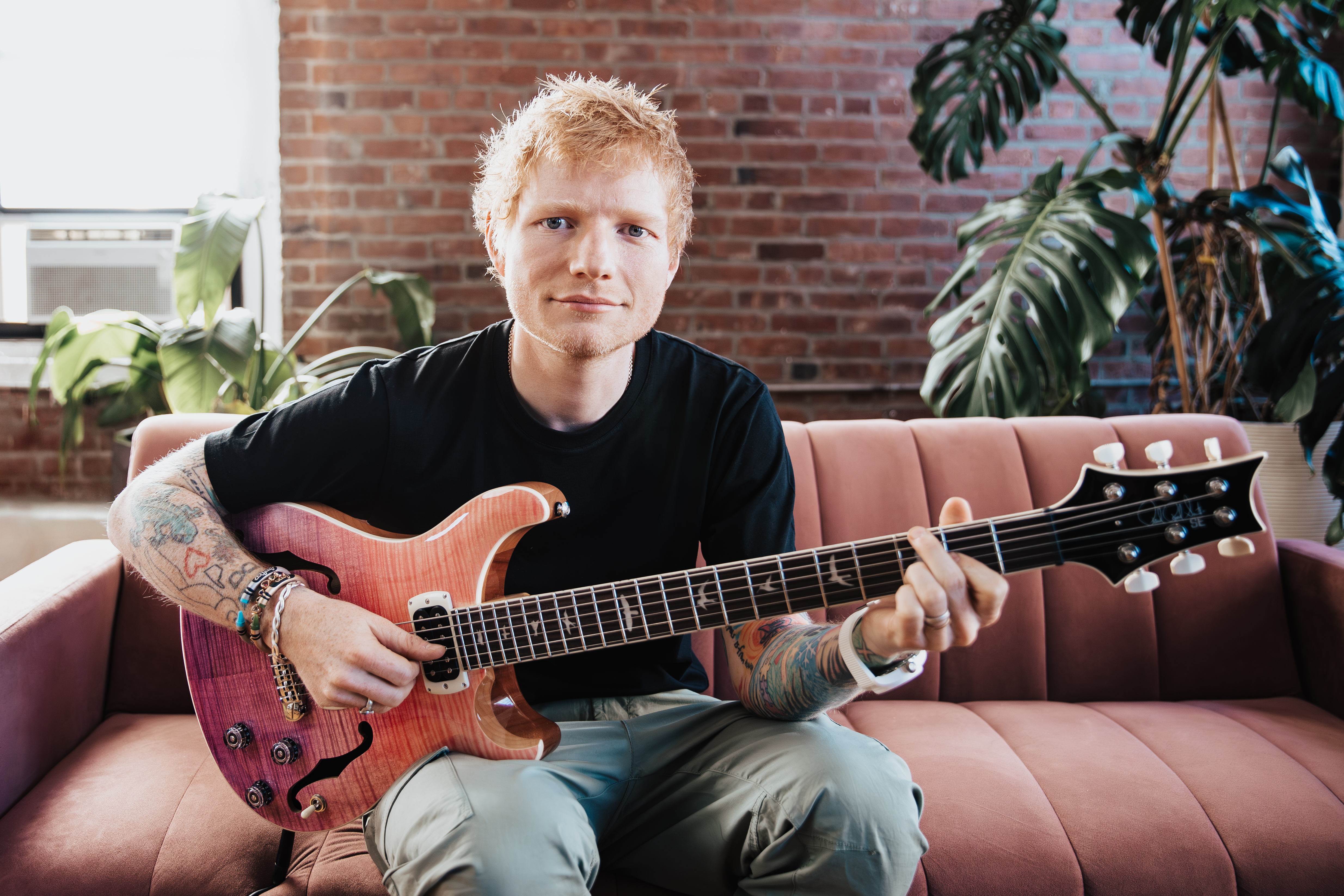
Ed Sheeran is a singer, songwriter, and guitarist whose songwriting and musicianship have made him one of the most influential artists of his generation. He mixes pop, folk, and acoustic-driven storytelling, and has built a career around honest lyrics, catchy melodies, and an authentic performance style. From busking on the streets to headlining stadiums around the world, his ability to connect with people has always been at the center of what he does.
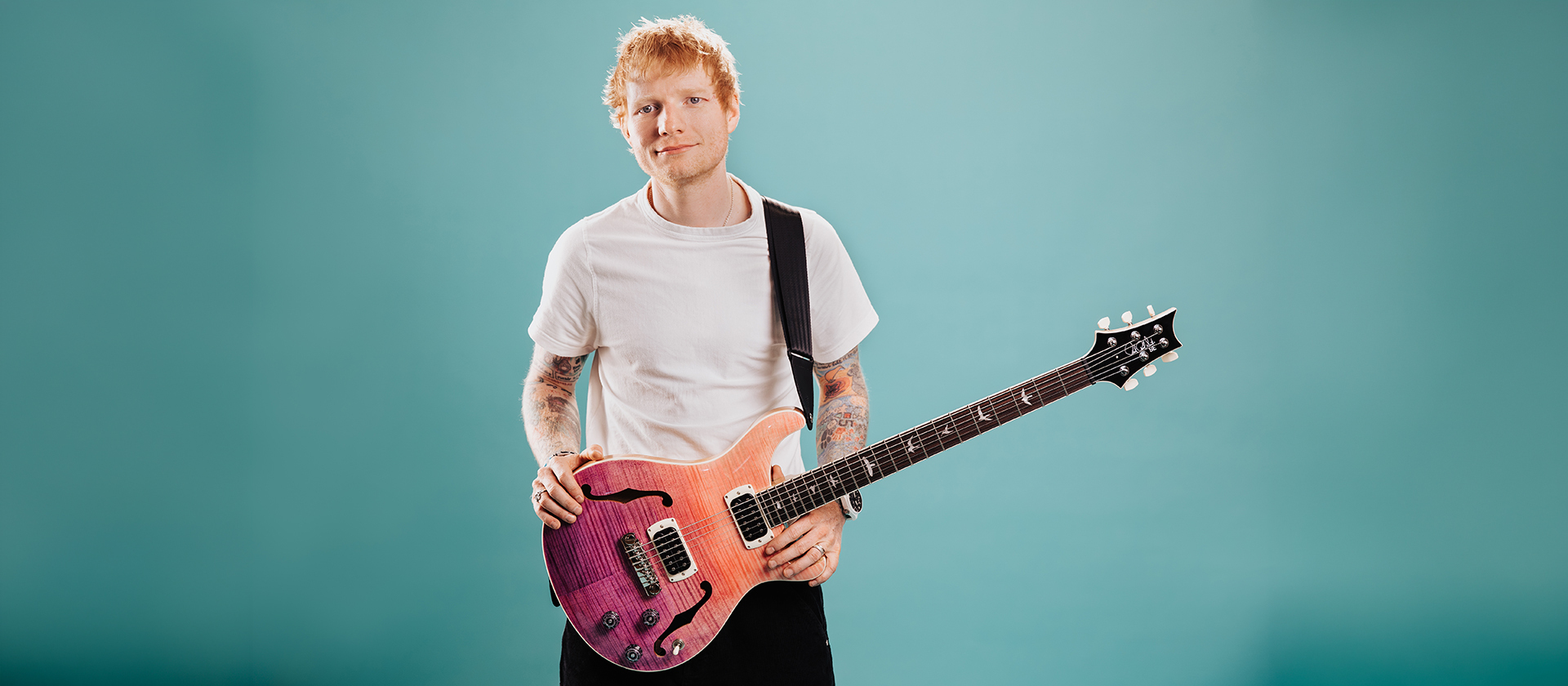
Ed has also become known for his guitar playing and his close relationship with his instruments. In partnership with PRS Guitars, he recently released his own PRS signature model, inspired by the tones, feel, and songwriting approach that have shaped his music over the years. Whether he’s writing, recording, or performing solo on stage, the guitar remains at the core of his creative process.
PRS: How do you balance using effects and pedals with maintaining the organic feel of your voice and rhythm when arranging a track around an electric guitar?
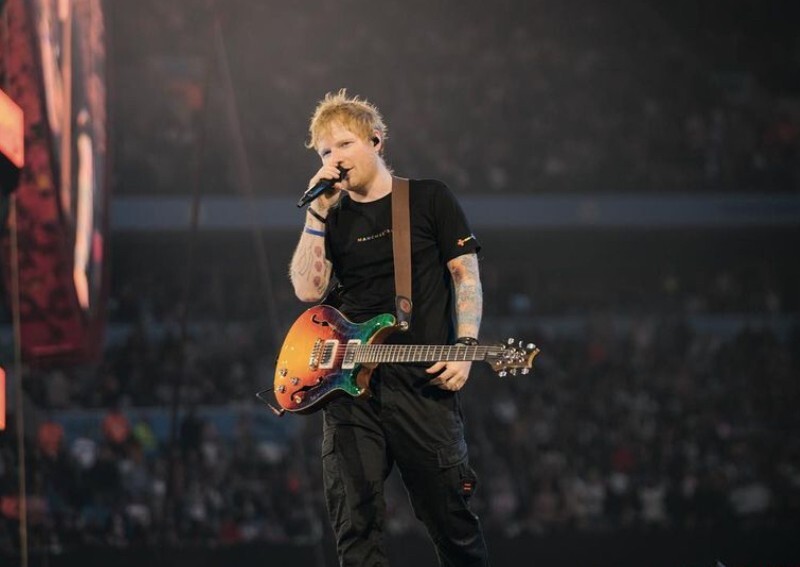
Ed: I wouldn’t say I’m a nerd when it comes to guitar pedals, but I know what I like, and I like what I know. I have a few different pedals that I use. Also, the loop pedal that I bought out - Sheeran Looper - has many plugs in, so we do a lot of stuff with that.
PRS: Which electric guitar players or albums have influenced your tone or approach, and how do you blend those influences with your own style?
Ed: John Mayer. Continuum is one of my favourite records. Then, the guitarist that made me want to start playing was Eric Clapton. I remember hearing his song ‘Layla’ for the first time. I also really liked his band, Derek and the Dominos, who have quite a compressed tone.
PRS: You are best known for playing the acoustic guitar. Do you use the electric guitar to explore different genres or textures in your music, and can you give an example of a song that started on electric?
Ed: Lots of my songs started out on electric guitar, with ‘Thinking Out Loud’ probably being the most well-known out of all of them. ‘Bad Habits’, too. As a guitar player, I don’t view it as electric vs acoustic; I view it as the guitar. There are lots of different electrics and acoustics you can play, but I find each guitar has a song in it, somewhere.
PRS: Last fall, you were seen with a distinctive PRS in the soundtrack video for the F1 film Drive; was that guitar the inspiration behind your PRS signature models?
Ed: It was part of the inspiration, yeah. We had already started the conversation about the models, but it was sort of a proof on concept. That was the first baritone hollow body PRS had produced, and it worked well.
PRS: You recently released your eighth studio album, “Play”; were there specific PRS guitars you relied on in the studio for this record, and can you point to a track where that setup is most evident?
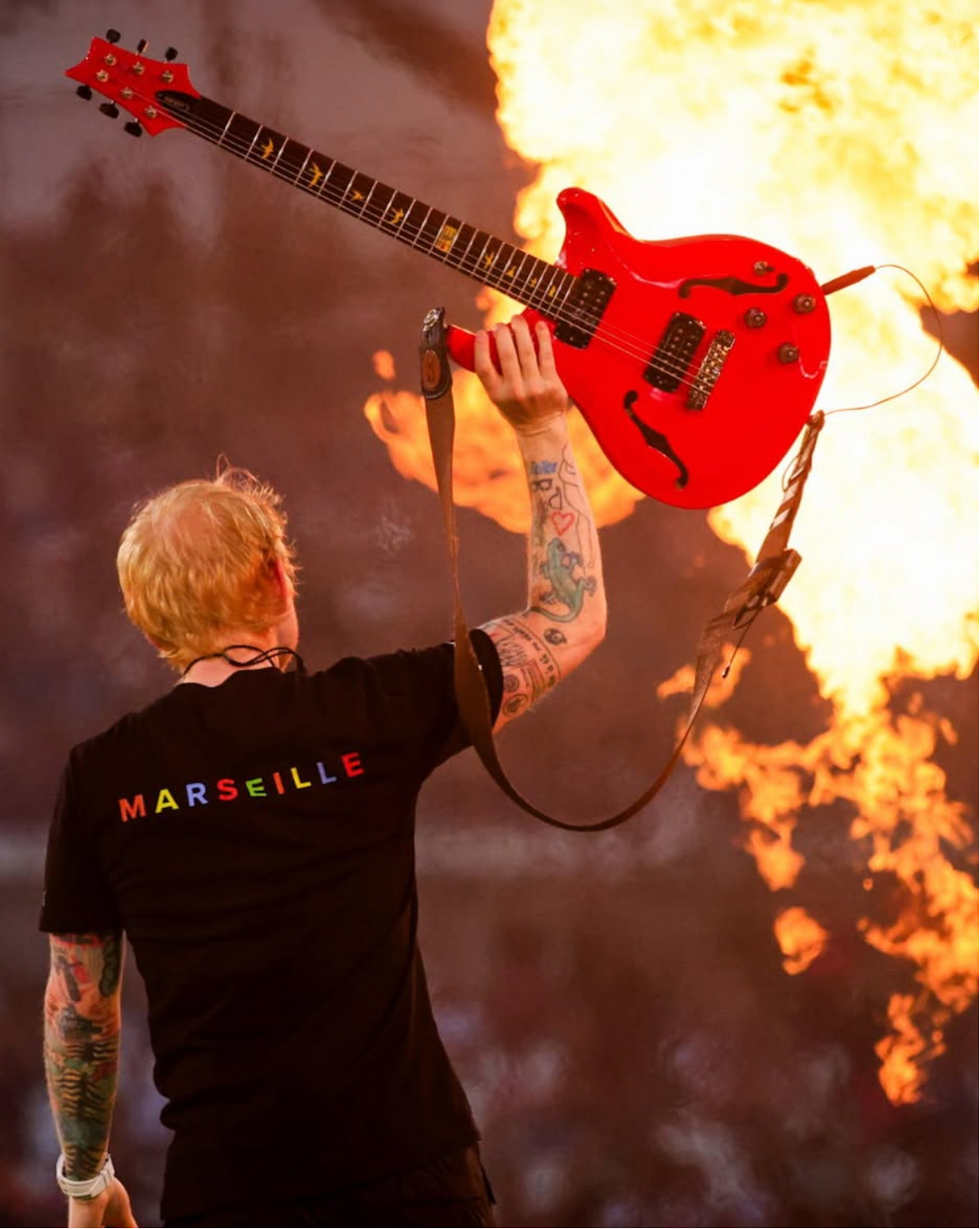
Ed: Not on Play, actually. I did a fair bit on Multiply, Divide, and Equals. I have six PRS’ in my studio. When I was recording Equals, I used the Purple Silver Sky a lot - it’s a very adaptable guitar.
PRS: What do you find most appealing about PRS guitars?
Ed: For me, they encapsulate all the things I love about lots of other guitars, but they bring all of those brilliant, different elements into one guitar. This guitar does everything I need it to, and I don’t have to keep switching it up. I love the versatility of PRS, and how great it sounds.
PRS: You recently released the new SE Hollowbody I Piezo Baritone model. Tell us what it was like working with PRS on the development of this guitar. Were there any special attributes that were most important to you?
Ed: I trust them as being one of the best guitar makers in the world, so I suggested the type of thing I wanted, and they nailed it, basically. I wasn’t hugely involved in the building stage, but I was once they had built the prototype to begin testing it.